Friday, January 24, 2014
8 Tips To Save You Some Coin at The Pump
We all try our best to save on gas each month and we all have certain things we do to get the most out of each tank when we fill up. But, did you know there also other not as well known tips to help maximize each tank for a long period of time. Check out these eight steps below:
Step 1. It's ok, enjoy your air conditioner on the highway. Consumer Reports says that AC's gas-guzzling reputation is undeserved. And, at higher speeds, opening the windows or sunroof can hurt on gas miles by increasing drag.
Step 2. Don't fill up your tank until you're practically on empty; the less fuel you're toting, the lighter your car, and the more you will save on gas.
Step 3. After filling up your car, turn the nozzle upside down before you remove it from your tank. You'll get another half a cup of gas that's stuck in the hose that will save on gas.
Step 4. Tighten your gas cap after filling up so you don't let any precious fuel evaporate. Try to park in the shade. This will also help save on gas by preventing evaporation.
Step 5. Put your car in overdrive for highway driving. It lowers your RPM, or revolutions per minute, which saves you gas money. Check your owner's manual for the recommended speed at which you may use overdrive. If you're due for new tires, get radials; they improve gas miles by two or three percent saving you gas money.
Step 6. Stay in one lane as much as possible; weaving uses up more gas miles.
Step 7. Use cruise control when you're on a flat highway, where it can increase gas miles by 7%. But don't use it on uneven roads, where it's not efficient.
Step 8. Turn off all electronics and climate controls before you cut the engine. With the extras off, your engine won't have to strain so hard to restart, leading to better gas miles.
Thursday, January 16, 2014
Texting While Driving Statistics
Texting and driving have become a very serious issue over the years. The
amount of fatalities and injuries continue to rise. This infographic
presents some interesting facts we bet you didn't know about texting and
driving.
For parents, always talk to your kids about driving safety and how every text can wait to be responded to if they're driving. Share this infographic with your friends and family to help get the message across to them and most importantly, be a good role model and don't text and drive while you're driving either.
Thursday, January 9, 2014
Buick Achieves Best Sales Year Since 2006
Buick recently announced that the company achieved its best sales year since 2006 as well as the fourth consecutive years of sales gains. This is outstanding news for the manufacturer. Going deeper into the figures; Buick’s U.S. retail sales for 2013 were up 13 percent over 2012, reaching the highest level in seven years and marking the brand’s fourth consecutive year of retail sales gains. Total U.S. Buick sales increased 14 percent in 2013, also the highest since 2006.
For more information on this great news, visit: http://bit.ly/1a57Xqz
Thursday, December 19, 2013
Car Gift Idea For Car Lovers
Do you have that special someone in your life that's a real car
enthusiast? There's no better time than now to find amazing gifts for
those important gearheads in our lives. There's always the option to
purchase service giftcards or new tires but Askmen.com has a great
article showcasing 10 gifts every gearhead will love.
Check out the 10 and let us know what you think of them in the comments section below! Visit: http://bit.ly/1i5gCAX and our website: http://bit.ly/1fqtBsR
Wednesday, December 11, 2013
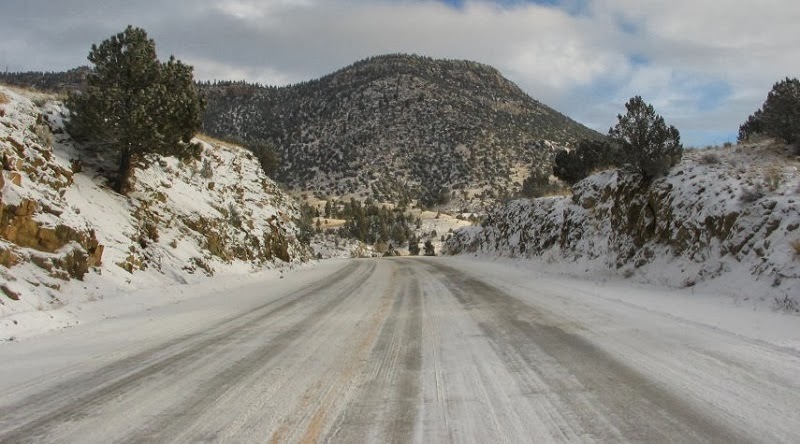
5 Mistakes Drivers Make In Snowy Conditions
Do you know what to do in order to drive safer in snowy road conditions? You'd be surprised to know so many drivers do the opposite of what they should do when driving in snowy conditions. Here are some of the biggest mistakes drivers on the road make when snowy weather conditions begin.
1. Thinking Your Four-wheel Drive Makes You Invincible
The biggest mistake a driver can make is to think four-wheel drive allows them to race down the road at top speeds. Remember, while it can help you get through difficult conditions it won't give you the traction you need to brake when it matters most.
2. Not Being Prepared
Many drivers find themselves caught off guard during the winter's first snow. In fact, the most dangerous day to be on the roads is the day after the first snowstorm. Drivers haven't prepared their cars for the weather, and they've probably forgotten their snow driving techniques from last year.
To ready your car for the winter, check that each of your tires has at
least a 6/32-inch (4.8-millimeter) deep tread. All-weather tires
can handle most driving conditions, but if you live in an area that
gets a lot of snow, you should consider purchasing snow tires.
3. Following Too Closely
Many people inexperienced with driving in the snow make a bad habit
out of tailing the vehicle in front of them too closely. Like driving
too fast, this lessens your reaction time if there's a problem with the vehicle ahead of you and you need to slow down suddenly.
It's recommended that you double your normal distance between cars, giving yourself a minimum braking distance of six seconds. Put another way, for every 10 mph you're traveling, you should give yourself four car lengths of space.
4. Slamming On The Brakes
It's recommended that you double your normal distance between cars, giving yourself a minimum braking distance of six seconds. Put another way, for every 10 mph you're traveling, you should give yourself four car lengths of space.
4. Slamming On The Brakes
When you feel your tires start to slip, it's easy to panic and slam on
the brakes. Don't do that as it removes traction from your tires, taking
away your ability to control your vehicle.
Once you've lost traction and your wheels are locked up, slamming your brakes won't change the situation. What you should do when you feel yourself begin to skid is ease off the accelerator and let the car slow down on its own. A moving tire means that there is still some traction, which is what you need to steer yourself out of a collision.
5. Driving Too Fast
Driving too fast is the biggest snow driving error.
Drivers have a bad habit of thinking that once they've reached the
highway they're fine to drive at their usual high speed. They couldn't
be more wrong. When your car starts to slip and you're heading for a
crash, every second counts. Driving too fast reduces the amount of time
you have to react and increases the severity of any collision. It also
takes four to 10 times longer to brake on icy or snowy pavement than it
does on dry asphalt.
Thursday, December 5, 2013
Snow Facts You May Not Have Known
Winter weather means snow will be falling in many areas of the country.
But, what do you really know about snow? Check out these eight
interesting facts that we bet you didn't know! Know any other snow facts we may not have added? Let us know in the comments section below!
2. Snow is actually clear and colorless.
“The complex structure of snow crystals results in countless tiny surfaces from which visible light is efficiently reflected. What little sunlight is absorbed by snow is absorbed uniformly over the wavelengths of visible light thus giving snow its white appearance.” - National Snow and Ice Data Center
3. The most snow ever recorded in a 24 hour period in the USA occurred at Silver Lake, Colorado in 1921 and was 76 inches of snow. (#2 = 63 inches was registered in Georgetown, Colorado on December 4, 1913).
4. Mt. Baker ski area in Washington State has the world record for snowfall at 1,140 inches of snow in the 1998/1999 winter season. Mt. Baker ski area is located near but not on the real 10,781’ Mount Baker. You can just imagine what the snow totals were on the real Mount Baker that year…
5. 80% of all the freshwater on earth is frozen as ice or snow. This accounts for 12% of the earth’s surface.
6. A blizzard occurs when you can’t see for 1/4 mile. The winds are always 35 miles an hour or more. The storm must last at least 3 hours to be classed as a blizzard. If any of these conditions are less, it is only a snowstorm.
7. The USA averages 105 snow producing storms per year. A typical storm will have a 2-5 day lifetime and drop snow in multiple states. This is annoying as we’d prefer it was 305 per year and lifetimes of a week or more.
8. All snowflakes have 6 sides.
1. The world’s largest snowflake was reported to be 15 inches across and 8
inches thick. The Guinness Book of World Records states that this giant
snowflake was found at Fort Keogh, Montana on January 28, 1887.
2. Snow is actually clear and colorless.
“The complex structure of snow crystals results in countless tiny surfaces from which visible light is efficiently reflected. What little sunlight is absorbed by snow is absorbed uniformly over the wavelengths of visible light thus giving snow its white appearance.” - National Snow and Ice Data Center
3. The most snow ever recorded in a 24 hour period in the USA occurred at Silver Lake, Colorado in 1921 and was 76 inches of snow. (#2 = 63 inches was registered in Georgetown, Colorado on December 4, 1913).
4. Mt. Baker ski area in Washington State has the world record for snowfall at 1,140 inches of snow in the 1998/1999 winter season. Mt. Baker ski area is located near but not on the real 10,781’ Mount Baker. You can just imagine what the snow totals were on the real Mount Baker that year…
5. 80% of all the freshwater on earth is frozen as ice or snow. This accounts for 12% of the earth’s surface.
6. A blizzard occurs when you can’t see for 1/4 mile. The winds are always 35 miles an hour or more. The storm must last at least 3 hours to be classed as a blizzard. If any of these conditions are less, it is only a snowstorm.
7. The USA averages 105 snow producing storms per year. A typical storm will have a 2-5 day lifetime and drop snow in multiple states. This is annoying as we’d prefer it was 305 per year and lifetimes of a week or more.
8. All snowflakes have 6 sides.
Thursday, November 21, 2013
Safe Cooking Tips For Thanksgiving
Thanksgiving is a wonderful time of year where families get together and
are thankful for all that they have. It is also a time for most people
to put on their chef hat and prepare a delicious feast for several
relatives. However, it can also be a dangerous time if you don't use
caution while preparing your feast. Here are some cooking safety tips
that everyone should follow to make Thanksgiving a happy and safe day.
Check food regularly while cooking and remain in the home while cooking. Use a timer as a reminder that the stove or oven is on.
Keep the kids away from the cooking area. Enforce a “kid-free zone” and make them stay at least three feet away from the stove.
Keep anything that can catch fire - pot holders, oven mitts, wooden
utensils, paper or plastic bags, food packaging, and towels or
curtains—away from the stove, oven or any other appliance in the kitchen
that generates heat.
Clean cooking surfaces on a regular basis to prevent grease buildup.
Purchase a fire extinguisher to keep in the kitchen. Contact the
local fire department to take training on the proper use of
extinguishers.
Always check the kitchen before going to bed or leaving the home to
make sure all stoves, ovens, and small appliances are turned off.
Install a smoke alarm near the kitchen, on each level of the home,
near sleeping areas, and inside and outside bedrooms. Use the test
button to check it each month. Replace all batteries at least once a
year.
Subscribe to:
Posts (Atom)